
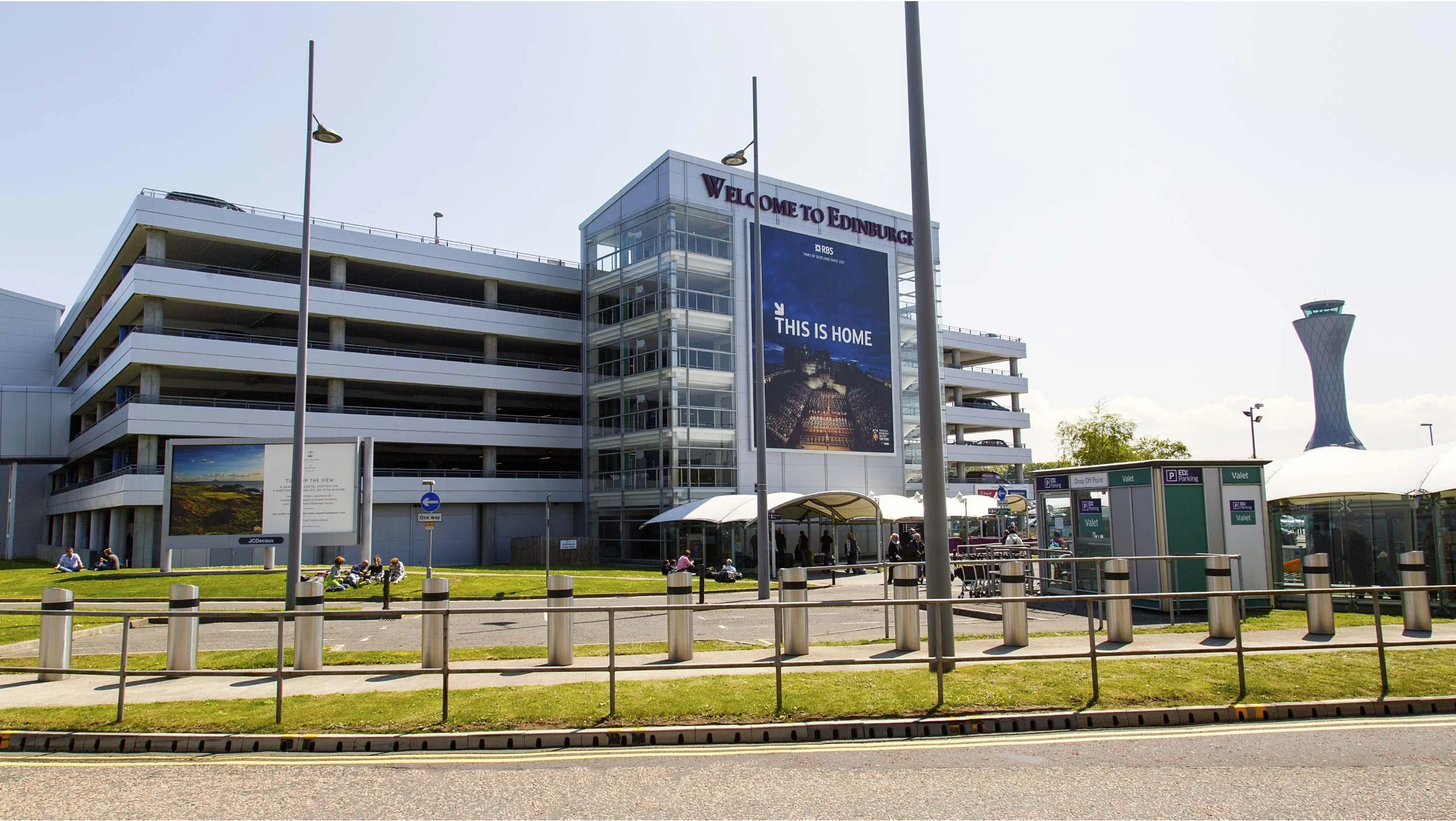
Edinburgh Airport Multi-Storey Car Park
Project description
A project was launched in 2024 to investigate and address deterioration of a multi-storey car park structure at a busy UK airport. In particular, it was suspected that strengthening may be required to address localised deterioration of the post-tensioning (PT) of the building’s concrete slabs after several decades of service with increasing traffic loading.
AQUILA’s structural investigation was focused on understanding the causes of deterioration and supporting the development of a strengthening / rehabilitation solution. It was also aimed at developing a structured approach to managing the structure’s inspection and maintenance in the future, using modern non-destructive testing (NDT) methods and equipment. The information gained relating to the structure’s condition would provide a solid foundation for further analysis, targeted maintenance, and the development of a long-term strategy to manage the asset effectively – with all data stored in a newly created “digital twin” on the cloud-based Inspect platform.
AQUILA’s contribution
AQUILA’s approach to supporting the proposed strengthening / rehabilitation work was centered on investigating the condition of the slab post-tensioning at critical locations, and assessing the extent of any deterioration. First, the slabs were scanned using a Proceq GP8100 ground-penetrating radar (GPR) device to establish the as-built layout of the PT tendons/ducts and any other slab reinforcement. Then, a Proceq Pundit PD8050 ultrasonic pulse echo (UPE) device was used to investigate the presence of voids in the PT ducts – helping to deduce the locations at which corrosion of PT tendons was most likely, and thus facilitating targeted, minimally invasive investigations at those locations.
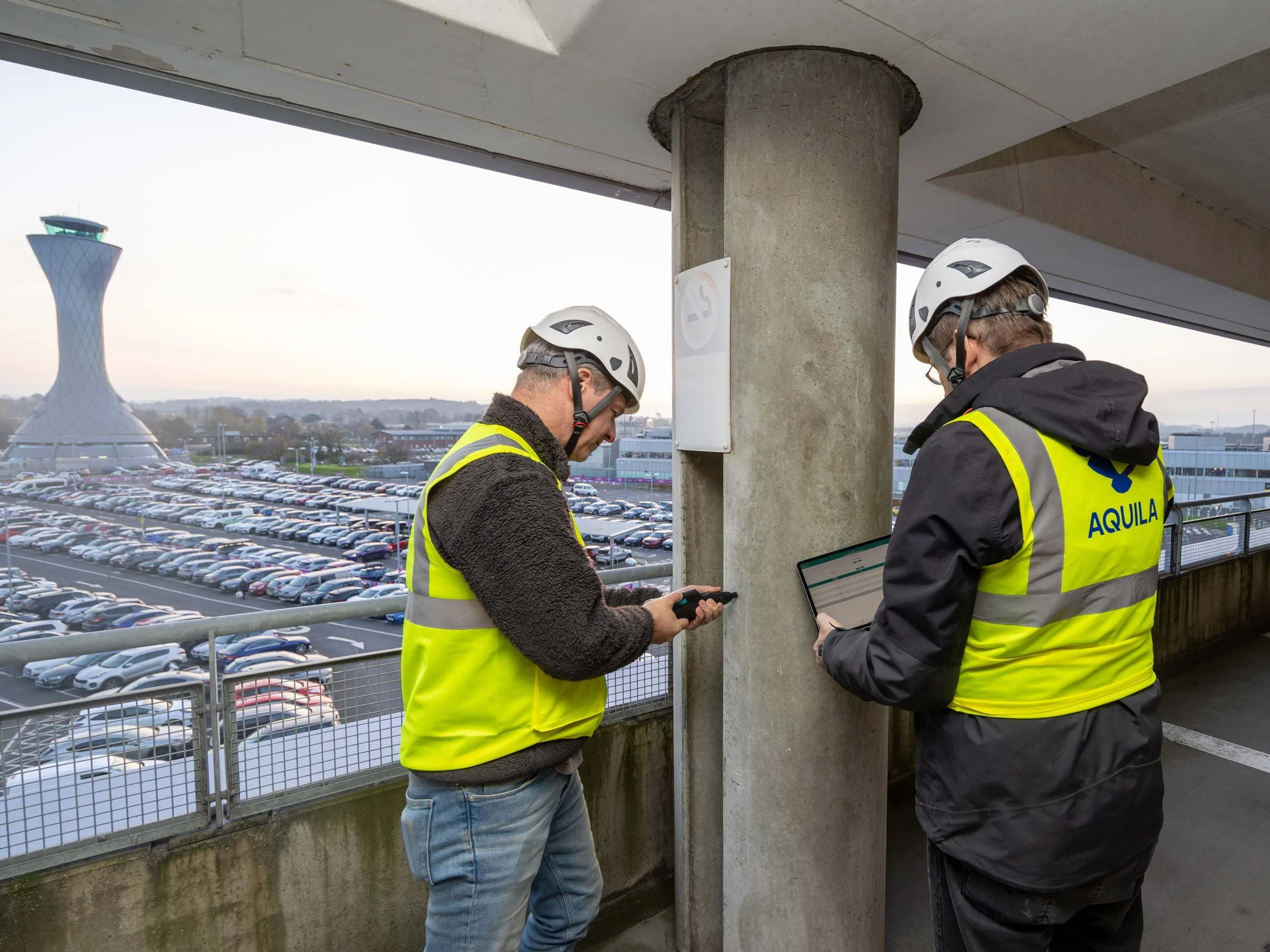
Aquila team members inspecting using a rebound hammer and INSPECT software.
Further non-destructive testing was then carried out to investigate other structural characteristics – e.g. using a Proceq OS8200 Schmidt Hammer (rebound hammer) to investigate concrete strength and uniformity, or a Resipod electrical resistivity testing device to evaluate susceptibility to corrosion of reinforcing elements. Pull-off testing was also carried out on the slab soffit, using a Proceq DY216 device, to assess the concrete’s ability to resist non-compressive forces (such as may arise in remedial methods such as the application of carbon fiber reinforcement strips to the slab soffit).
This approach to the structural investigations helped minimize the effort required to understand the existence and the extent of any deterioration and to develop a sound approach to any required remediation, while also minimising any weakening of the structure and disruption to structure use.